
AI jewelry identifier for Android

What is it made of, and what is it worth?

Photograph a ring from a drawer, a necklace from an estate sale or a stone you can’t place. Get back the metal, the gemstones, the era, the condition and an estimated value.

One free scan every day · 7 languages

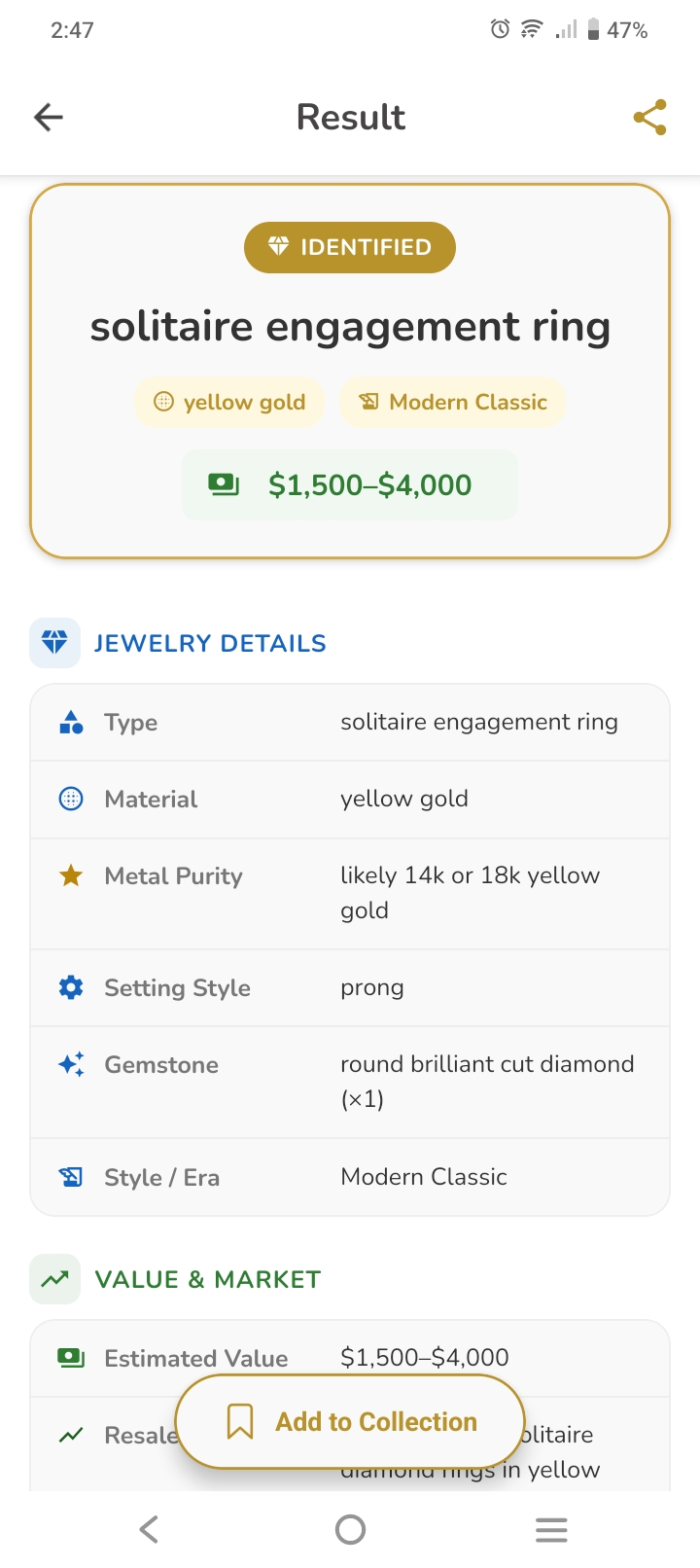
Scan result for a gold diamond ring in Jewelry Identifier Appraisal

Every scan

One photo, six answers.

Each result also says how confident the AI is and what you should check next.

Jewelry type
Ring, necklace, earrings, bracelet, brooch, watch or loose stone
Metal and purity
Gold, silver, platinum or plated, with a likely karat or fineness
Gemstones
Each stone named, with how many there are
Setting
Prong, bezel, pavé, channel, halo and more
Era and style
Victorian, Art Deco, retro, mid-century, modern
Condition
Visible wear, loose stones, scratches and damage
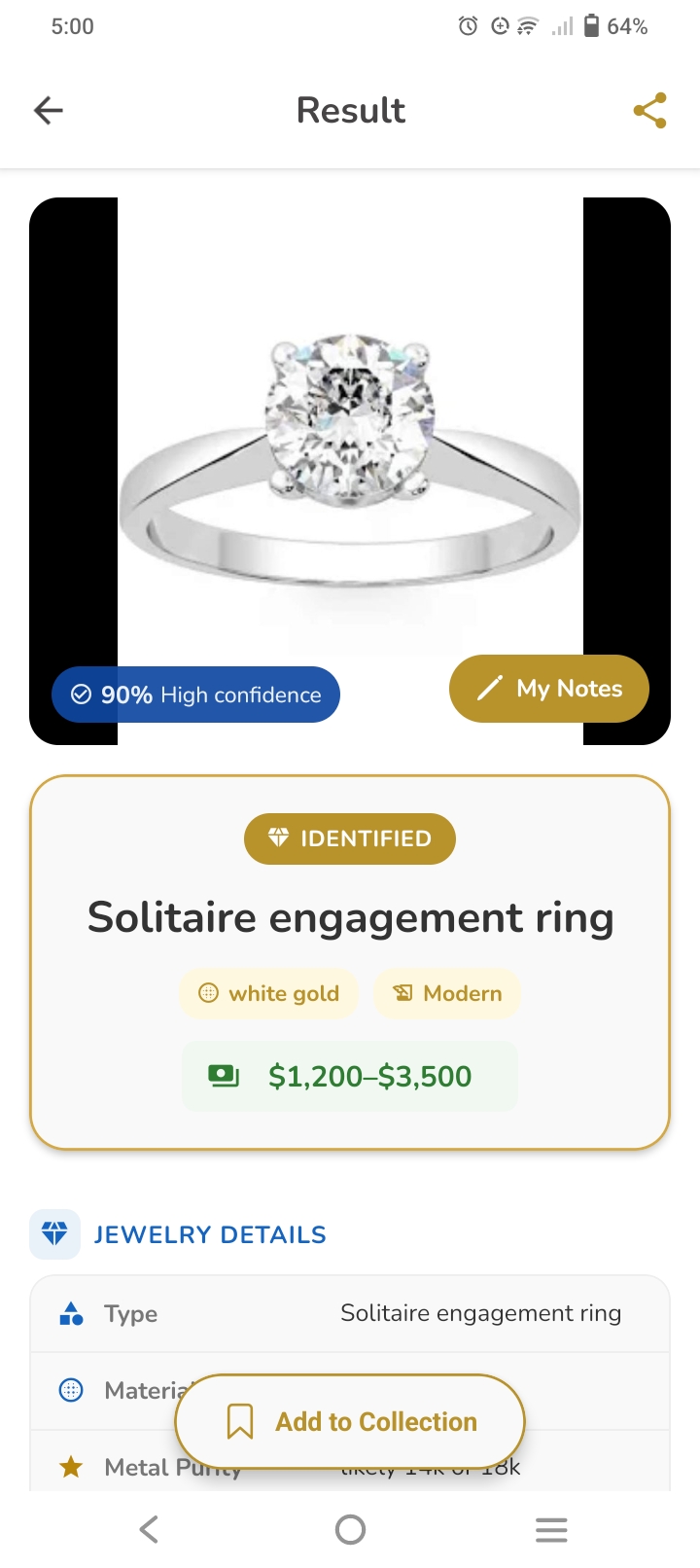
Diamond scanning screen in Jewelry Identifier Appraisal

Diamond scanning

Real diamond, or cubic zirconia, moissanite or glass?

The scanner looks for the visual signs a jeweler checks first, on rings, earrings and loose stones. It tells you what looks right, what looks off, and whether the stone deserves a professional test.
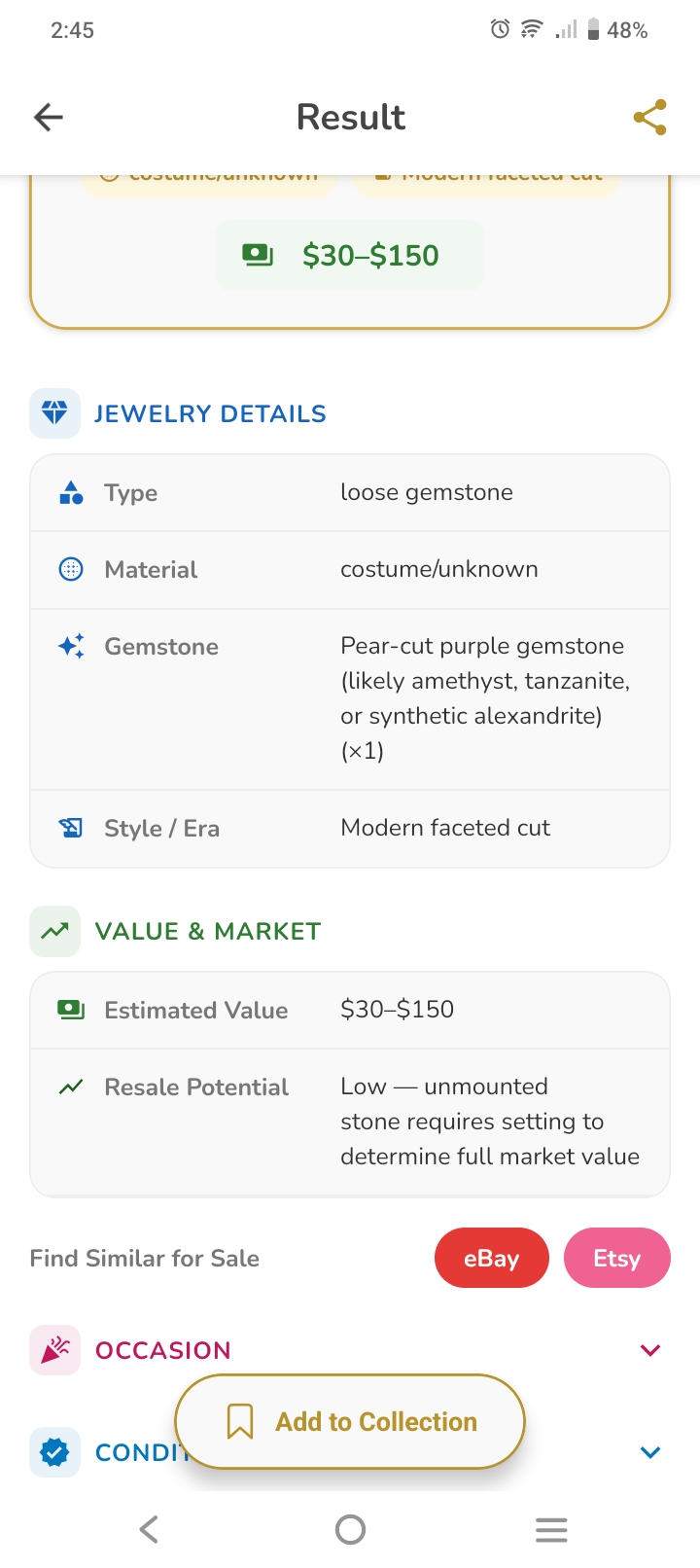
Gemstone identification screen in Jewelry Identifier Appraisal

Gemstone identification

Name the stone, count the stones.

Rubies, sapphires, emeralds, opals, amethyst, pearls, turquoise and more, set in jewelry or loose. Each result explains the visual clues behind the identification.

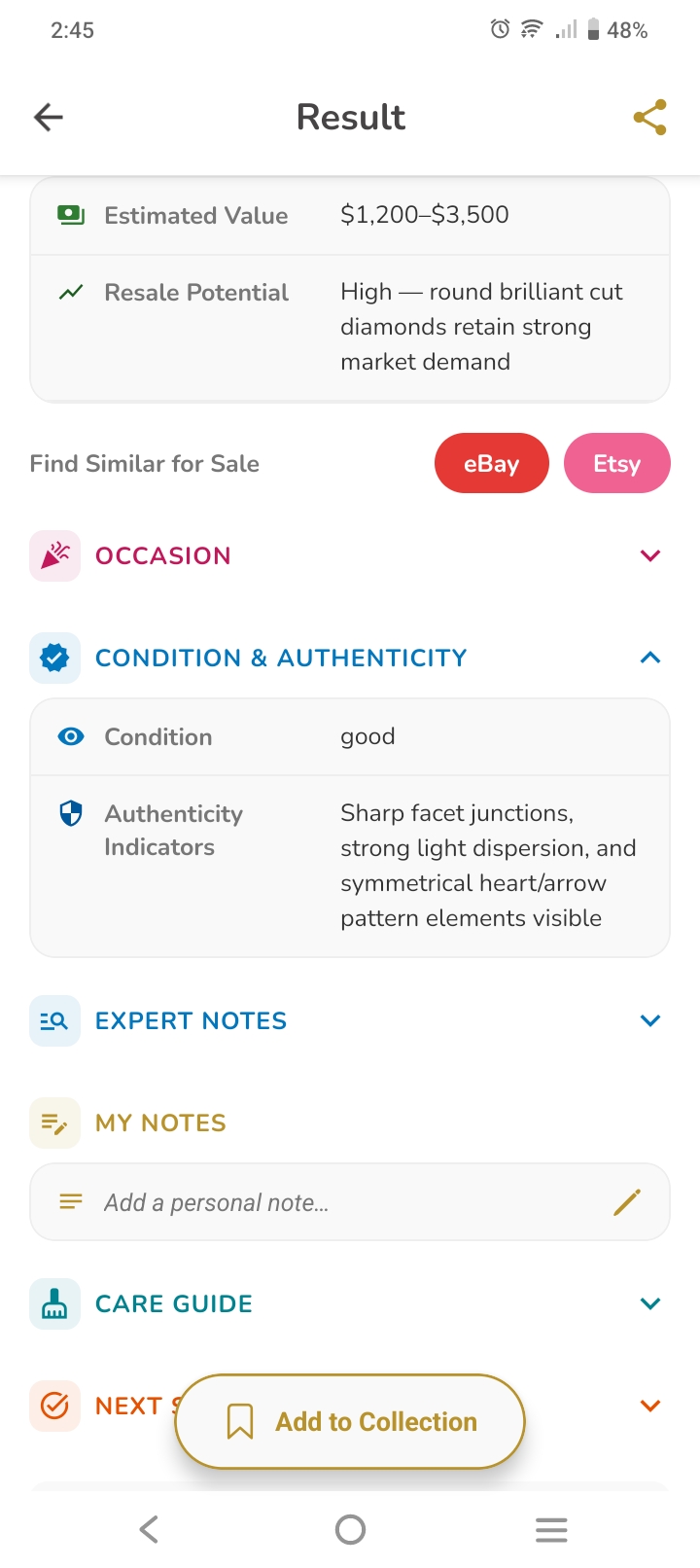
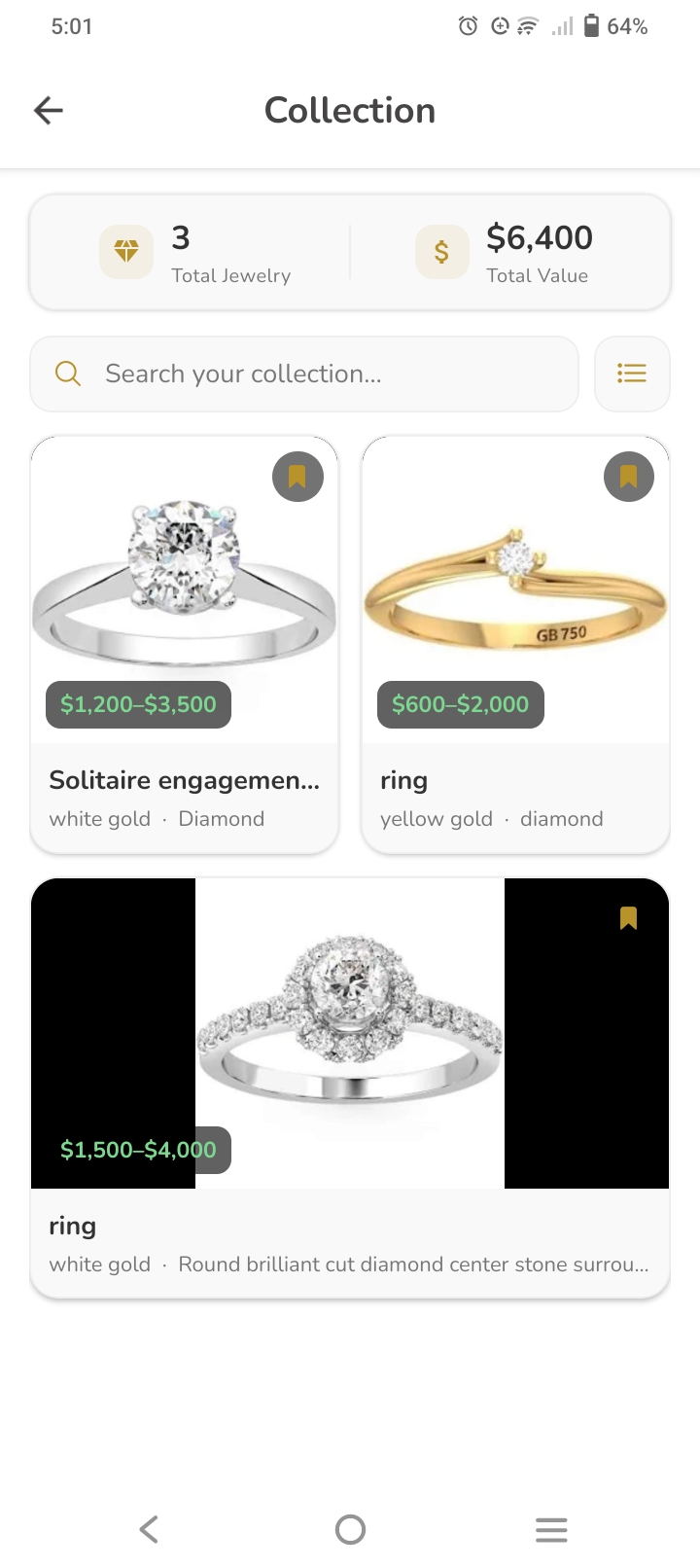
Value and collection screen in Jewelry Identifier Appraisal

Value and collection

Know what it is worth before you sell, insure or buy.

Premium adds an estimated value range and resale potential to every scan. Save pieces to a collection with photos and notes, and follow the running total of everything you own.

Setting, cut and era screen in Jewelry Identifier Appraisal

Setting, cut and era

The details a jeweler would write down.

Each result lists the setting style, the cut and number of stones, and the style or era of the piece. Open the care guide for cleaning and storage advice that won’t damage the metal or the stones.

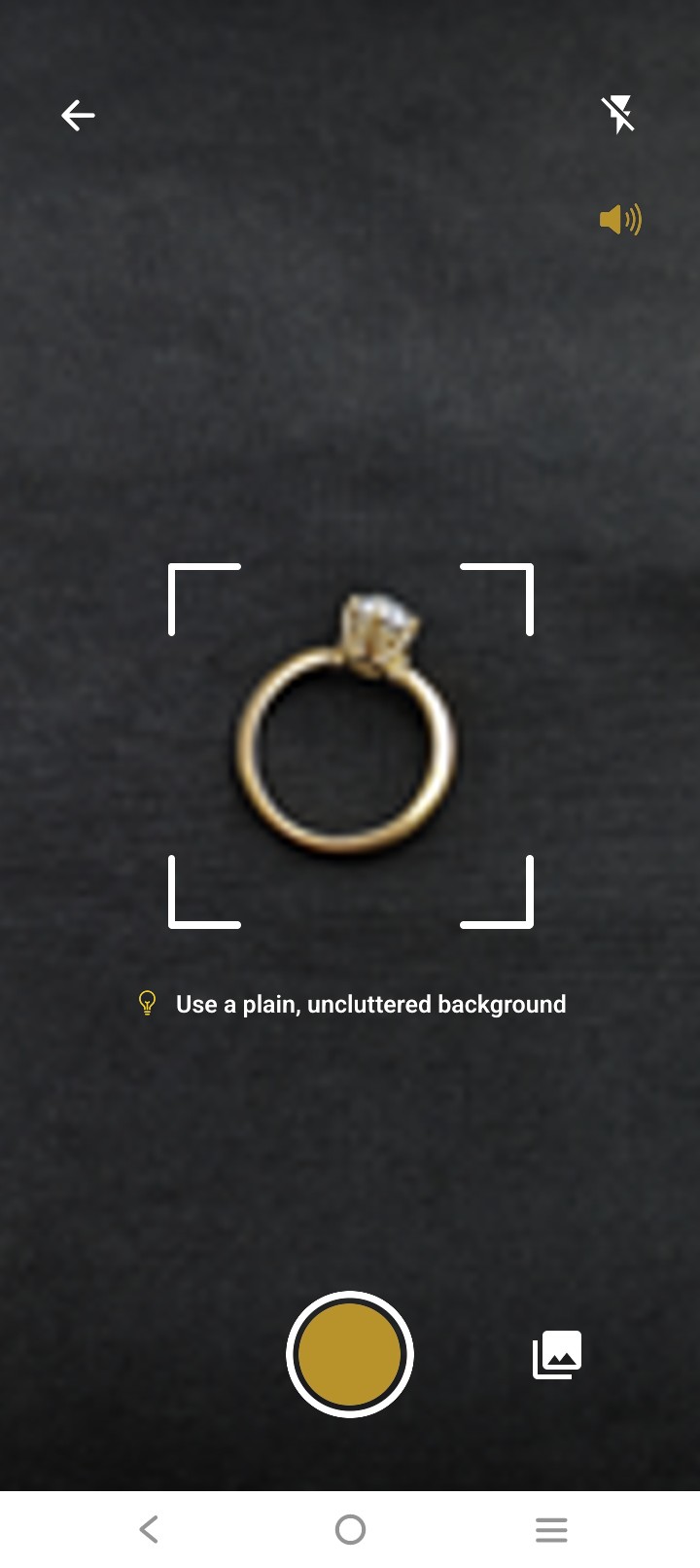
Camera screen in Jewelry Identifier Appraisal with a ring inside the scan frame

How it works

From photo to report in four steps.

  1. Take a photo

    Use the camera or pick a photo from your gallery. Good light and a close, sharp shot give the best results.

  2. Let the AI read it

    It analyzes the metal, gemstones, setting and condition.

  3. Read the report

    Identification, confidence, authenticity indicators and recommended next steps.

  4. Save or share

    Add the piece to your collection, or send the report to someone.

Made for people holding a piece they can’t quite place.

  • You inherited jewelry and want to know what it is
  • You hunt thrift stores, flea markets and estate sales
  • You resell and check pieces before listing them
  • You collect and want to track what you own
  • You want a second opinion before paying for a diamond or gemstone

Questions

Is the app free?

Yes. You get one free scan every day. Premium unlocks unlimited scans, value estimates and your collection.

Can a photo tell if a diamond is real?

A photo can show visual signs: how the stone returns light, its facets, its setting and the metal around it. The app uses these signs to flag stones that look doubtful. It cannot physically test the stone, so use it as a first pass before a thermal or electrical diamond tester.

How accurate are the value estimates?

They are informed estimates based on what the photo shows. Weight, exact purity and stone grade affect value a lot and cannot be measured from a picture. For insurance or a sale, get a certified appraisal.

Which jewelry can it identify?

Rings, necklaces, chains, earrings, bracelets, pendants, brooches and loose gemstones, in gold, silver, platinum and plated metals.

Which languages does it support?

English, French, Spanish, Italian, Portuguese, German, Arabic.

Is it on iPhone?

The app is currently available for Android on Google Play.

Scan your first piece today.

Get it on Google Play

Identifications, purity, value ranges and authenticity signs are AI estimates from photos, not certified appraisals, and they can be wrong. A photo can’t physically test a stone or metal. For insurance, sales or anything valuable, confirm with a certified appraiser or gemologist.